What is Smart Manufacturing?
Smart manufacturing uses AI, data analytics, IoT, and automation to create intelligent production systems.
Instead of reactive operations, manufacturers can use connected data and AI models to improve production performance continuously.
- Predict machine failures before they occur
- Optimize production processes in real-time
- Monitor performance across every line
- Make data-driven decisions at every level
Faster, more efficient, and scalable production.
1. Predictive Maintenance
One of the biggest challenges in manufacturing is unexpected machine downtime. Traditional maintenance is either reactive or scheduled in a way that is not always efficient.
With AI, machine data can be monitored continuously and maintenance can be scheduled before failure occurs.
- Monitors machine sensor data continuously
- Predicts failures before they happen
- Schedules maintenance proactively to prevent disruptions
Reduced downtime, lower maintenance costs, and increased productivity.
2. Real-Time Production Monitoring
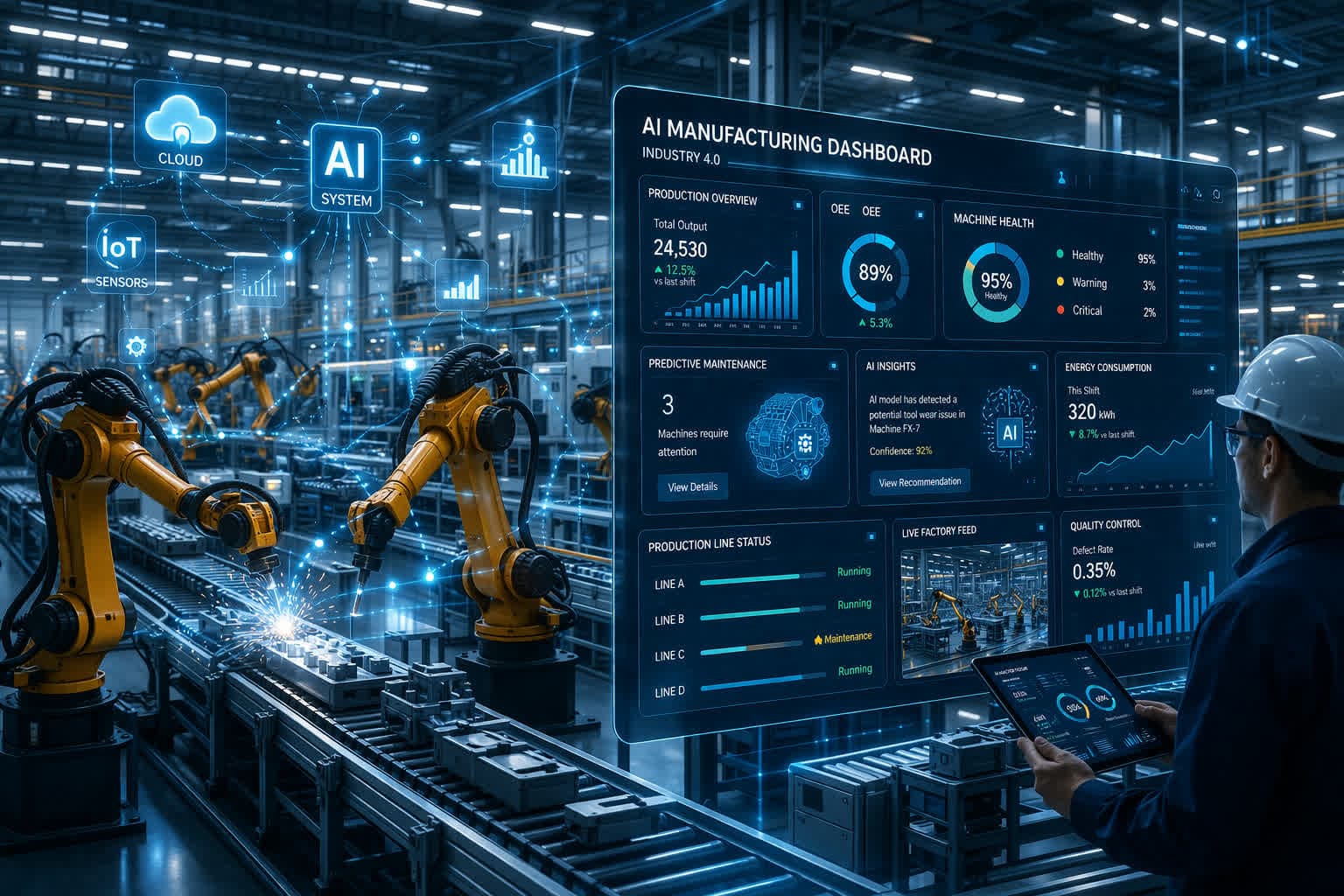
Visibility is critical for efficient operations. AI-powered dashboards provide live production data and machine-level insight so plant leaders can react quickly.
- Live production throughput data
- Machine-by-machine performance tracking
- Output and efficiency metrics in one view
Faster decision-making, immediate issue detection, and improved operational control.
3. Demand Forecasting and Inventory Optimization
Balancing demand and supply is a constant challenge in manufacturing. AI helps businesses plan more accurately and avoid inefficiencies tied to inventory imbalance.
- Predict product demand by SKU and region
- Optimize raw material and finished goods inventory
- Reduce overstocking and shortages simultaneously
Better inventory management, reduced costs, and improved customer satisfaction.
4. Quality Control with AI
Maintaining consistent product quality is essential. AI-powered quality systems can analyze production data and visual inspection signals far faster than manual review.
- Detect defects using computer vision
- Analyze production pattern anomalies
- Identify root causes of quality issues
Reduced defects, improved product quality, and more consistent output.
5. Production Optimization
AI enables smarter production planning by identifying waste, improving resource allocation, and reducing bottlenecks across the production line.
- Optimize workflows and scheduling
- Allocate labor and equipment efficiently
- Identify and eliminate production bottlenecks
Higher production efficiency, faster turnaround time, and increased output.
6. Connected Supply Chain
Smart manufacturing extends beyond the factory floor. AI creates stronger coordination across suppliers, warehouses, and logistics systems.
- Real-time supplier visibility and alerts
- Warehouse inventory sync with production schedules
- Logistics coordination to reduce inbound delays
Seamless coordination, better demand planning, and reduced delays.
Real Business Impact
Manufacturers adopting AI typically see measurable improvements across output, maintenance performance, and cost structure.
- 30–40% increase in production efficiency
- 50% reduction in unplanned downtime
- Improved inventory turnover
- Significant cost savings across operations
Challenges in Adoption
Despite the benefits, manufacturers often face practical hurdles when implementing AI at scale.
- High initial infrastructure investment
- Integration with legacy OT/IT systems
- Data availability and sensor quality
- Shortage of AI expertise on the floor
Start with high-impact use cases like predictive maintenance and monitoring.
How to Start Your Smart Manufacturing Journey
The best path is to build a strong digital base first and then add AI in stages that produce measurable operational value.
- Digitize your key production processes
- Centralize sensor and production data
- Implement real-time monitoring dashboards
- Introduce AI models for maintenance and quality gradually
Focus on ROI and scalability at every step.
Final Thoughts
Smart manufacturing is no longer optional. It is becoming a necessity for businesses that want to improve efficiency, reduce costs, and scale operations.
The future belongs to data-driven factories that can adapt quickly and operate with better precision.