
What is AI in Business?
AI in business refers to the use of machine learning, data analytics, and automation technologies to improve decision-making and streamline operations.
Instead of relying on manual processes, businesses can now use AI to analyze information faster, automate repetitive work, and make more informed decisions.
- Analyze large datasets instantly
- Predict trends and outcomes
- Automate repetitive tasks
- Make smarter, faster decisions
1. Smarter Decision-Making with Data
One of the biggest advantages of AI is its ability to turn raw data into actionable insights. Businesses today generate massive amounts of data, but without AI, much of it goes unused.
- Predict customer behavior
- Identify sales trends
- Optimize pricing strategies
Better decisions and faster growth.
2. Automation of Repetitive Tasks
AI helps automate time-consuming tasks that normally consume team capacity and slow down execution.
- Data entry
- Reporting
- Customer support through chatbots
- Inventory tracking
Up to 60–70% time savings, with teams freed up for higher-value work.
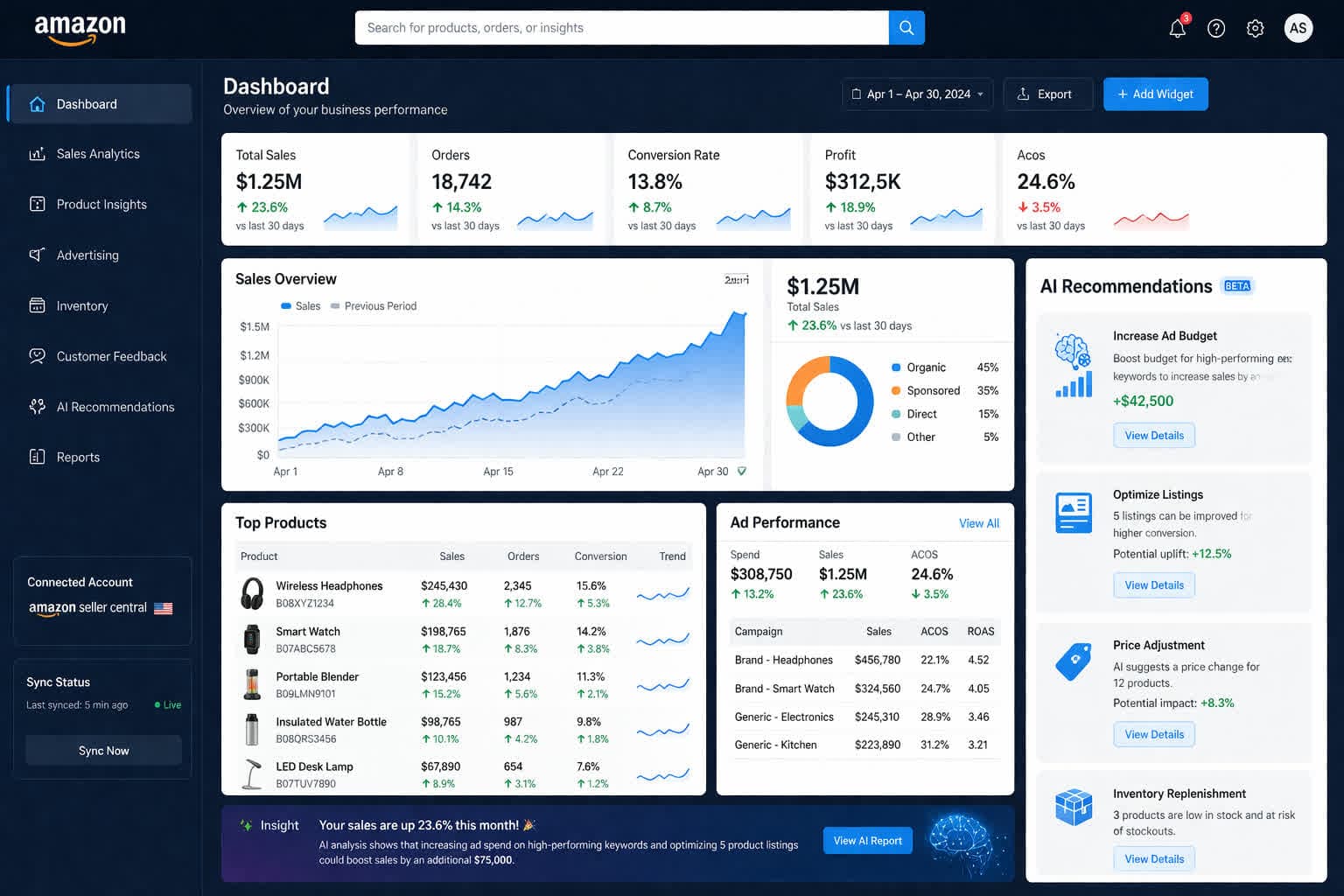
3. Real-Time Insights and Dashboards
Modern businesses need real-time visibility to stay competitive. AI-powered dashboards help leaders monitor operations as they happen instead of waiting for delayed reporting cycles.
- Live performance tracking
- Sales and operational insights
- Instant alerts for anomalies
Faster response and better control.
4. Predictive Analytics for Growth
AI does not just analyze the past. It can help businesses predict future scenarios and prepare for them with more confidence.
- Forecast demand
- Plan inventory
- Predict customer churn
- Optimize supply chains
Reduced risk and improved planning.
5. Personalized Customer Experience
AI enables businesses to deliver highly personalized customer experiences across sales, marketing, and support.
- Product recommendations
- Targeted marketing campaigns
- Dynamic pricing
- Customer segmentation
Higher conversions and stronger customer satisfaction.
6. Industry-Wide Impact of AI
AI is not limited to one vertical. It is transforming how companies operate across industries.
- Healthcare: Faster diagnosis and patient data analysis
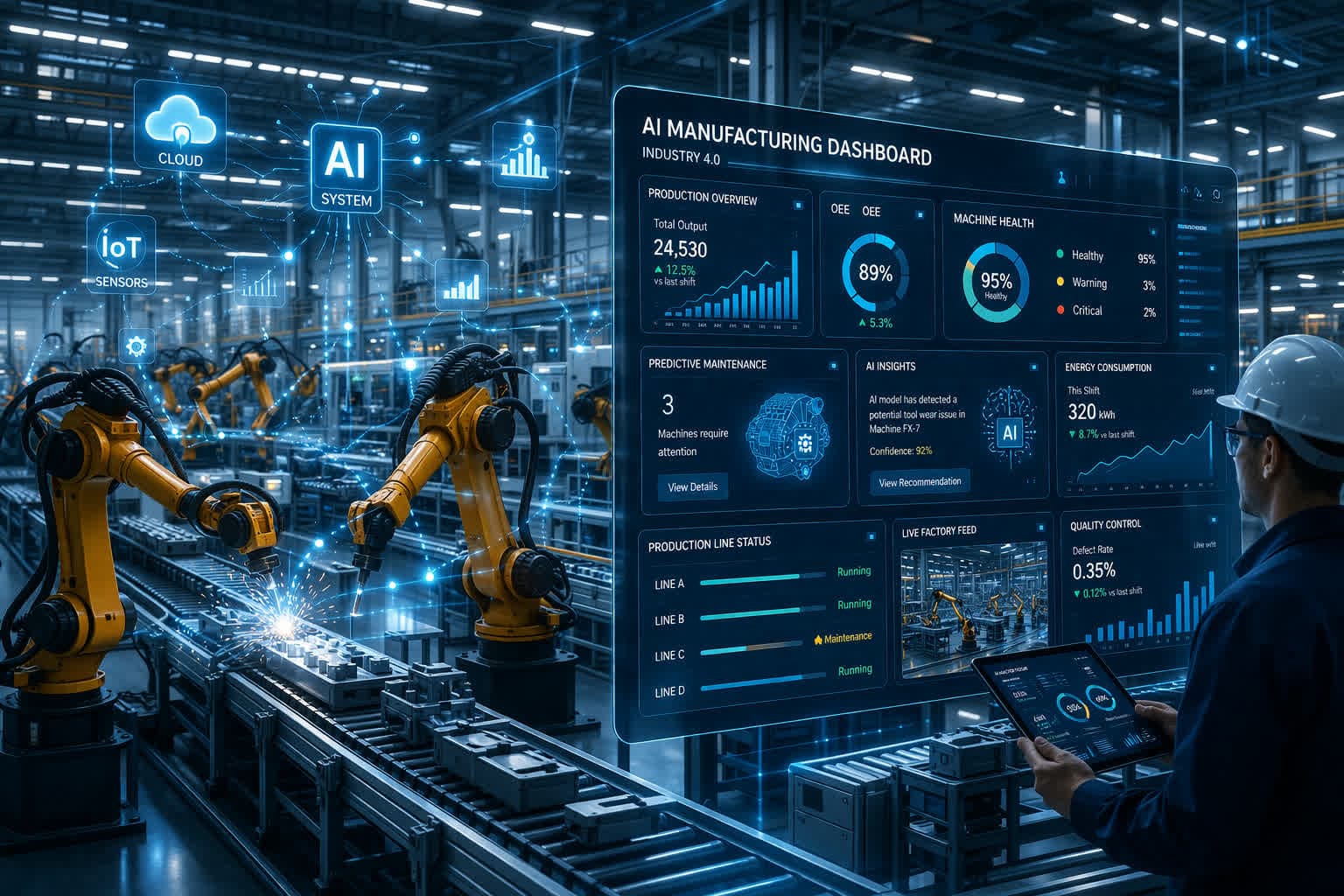
- Manufacturing: Predictive maintenance and efficiency optimization
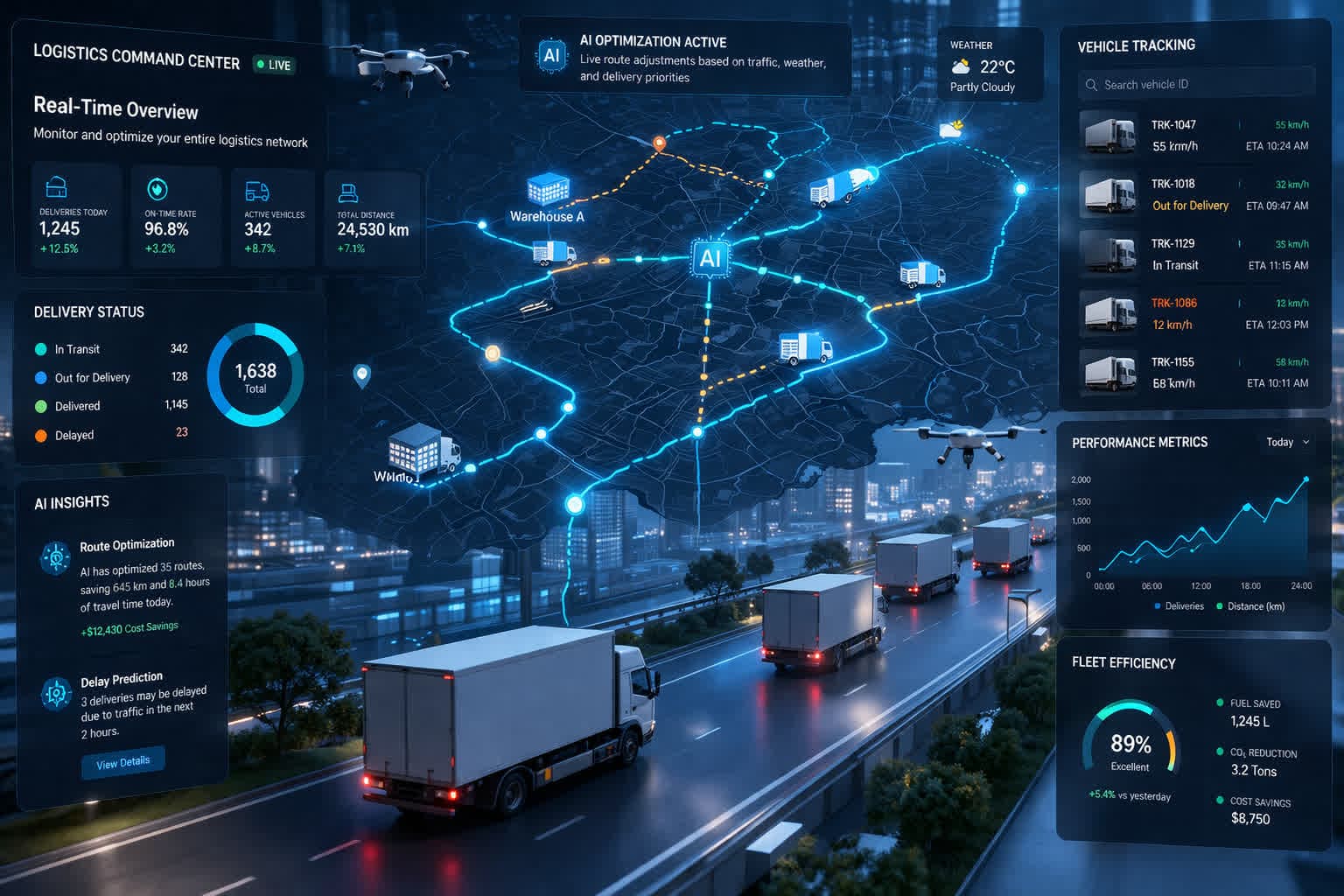
- Logistics: Route optimization and real-time tracking
- Finance: Fraud detection and automated reporting
- Retail: Sales analytics and customer insights
AI is not industry-specific. It is business-critical.
7. Cost Reduction and Efficiency
AI helps businesses improve profitability by cutting waste, reducing errors, and making better use of resources.
- Reduce operational costs
- Minimize human errors
- Optimize resource allocation
Higher profitability with fewer resources.
Challenges in Adopting AI
Despite its benefits, many businesses still struggle with AI adoption because the path is often unclear at the beginning.
- Lack of technical expertise
- Poor data quality
- High initial investment
- Unclear ROI
The practical approach is to start small and scale strategically.
How to Start Your AI Journey
If your business is new to AI, the best path is to begin with real operational pain points instead of chasing large, vague transformations.
- Identify repetitive or data-heavy processes
- Start with analytics and dashboards
- Implement automation
- Gradually introduce predictive models
Focus on business impact, not just technology.
Final Thoughts
AI is no longer a competitive advantage alone. It is becoming a business necessity. Companies that adopt AI today will move faster, make smarter decisions, and scale more efficiently.
Businesses that delay adoption risk falling behind as competitors improve execution, cost efficiency, and customer experience.