What is AI in Logistics?
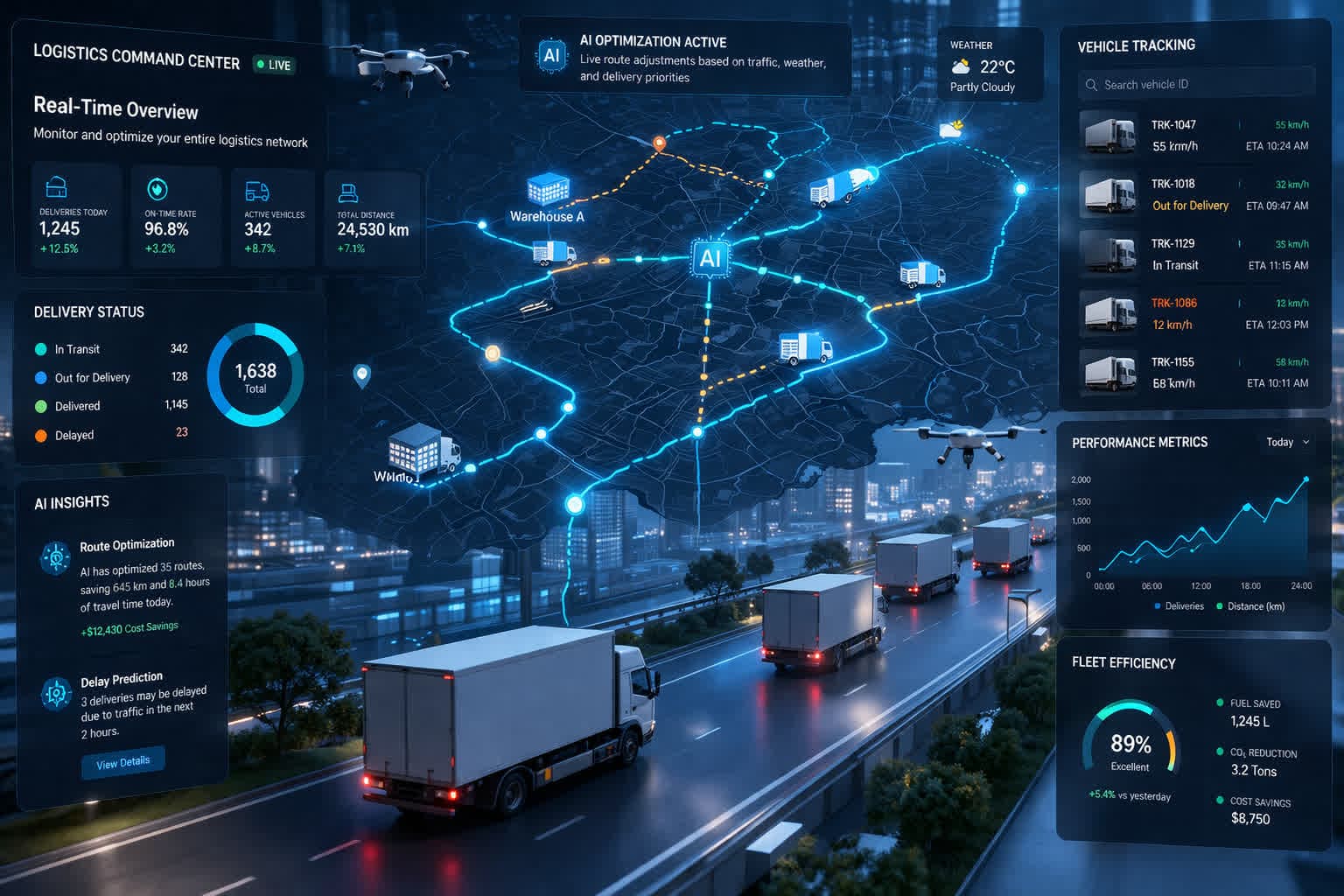
AI in logistics refers to the use of data analytics, machine learning, and automation to improve transportation, warehousing, and supply chain operations.
Instead of relying on manual planning, businesses can use AI to optimize operations continuously and make better decisions based on live conditions.
- Optimize routes automatically
- Predict delivery times
- Monitor fleets in real-time
- Make data-driven decisions
Smarter, faster, and more efficient logistics operations.
1. Route Optimization with AI
One of the biggest challenges in logistics is planning efficient delivery routes. Traditional methods usually depend on static routes, manual planning, and no real-time adjustments.
With AI, routing becomes dynamic and responsive to conditions on the ground.
- Analyzes traffic, weather, and delivery priority
- Suggests the most efficient routes
- Updates routes in real-time as conditions change
Faster deliveries, lower fuel costs, and improved delivery efficiency.
2. Predictive ETA
Customers expect accurate delivery timelines. AI helps estimate delivery times more accurately by using real-time operational data instead of fixed assumptions.
- Predict delivery times based on real-time data
- Adjust ETAs dynamically throughout the journey
- Notify customers proactively about delays
Better customer experience, fewer missed deliveries, and higher trust.
3. Real-Time Fleet Tracking
Visibility is critical in logistics. AI-powered tracking systems give operators a live view of what is happening across the fleet and surface issues as they emerge.
- Monitor vehicle location in real-time
- Track driver performance metrics
- Identify delays and deviations instantly
Improved operational control, faster issue resolution, and better fleet management.
4. Demand Forecasting and Planning
Poor planning leads to inefficiencies across inventory, delivery schedules, and resource allocation. AI improves planning by forecasting likely demand patterns ahead of time.
- Predict demand patterns by region and season
- Optimize inventory placement across depots
- Plan delivery schedules in advance
Reduced delays, better resource utilization, and lower operational costs.
5. Automation of Logistics Operations
Manual processes slow down logistics operations. AI can automate planning, coordination, and reporting tasks that otherwise consume time and create avoidable errors.
- Automated dispatch planning
- AI-driven load optimization
- Automated reporting and analytics
Time savings, reduced human errors, and faster operations.
6. Fuel Cost Optimization
Fuel is one of the biggest logistics expenses. AI helps reduce unnecessary cost by improving route quality, reducing idle time, and supporting better driving patterns.
- Optimize routes for fuel efficiency
- Reduce idle time at stops
- Coach drivers toward fuel-efficient patterns
15–25% reduction in fuel costs and better profitability.
7. Predictive Maintenance
Unexpected breakdowns cause delays, missed commitments, and higher repair costs. AI helps monitor asset health and predict failures before they happen.
- Monitor vehicle health signals continuously
- Predict failures before they cause breakdowns
- Schedule proactive maintenance to minimize downtime
Reduced downtime, lower repair costs, and improved reliability.
Real Business Impact
Companies using AI in logistics typically see measurable improvement across delivery performance, fuel spend, and route efficiency.
- 30% faster delivery times
- 20% reduction in fuel costs
- 40% improvement in route efficiency
- Better on-time delivery rates
Challenges in AI Adoption
Despite the benefits, logistics businesses still face practical adoption challenges that can slow implementation.
- Integration with existing legacy systems
- Data quality and consistency issues
- Initial setup cost and time
- Lack of internal AI expertise
The best starting point is high-impact areas like route optimization and tracking.
How to Get Started with AI in Logistics
The most effective AI rollouts start with the right operational foundation and expand from there.
- Centralize your logistics data
- Implement real-time tracking systems
- Start with route optimization
- Add predictive analytics gradually
Focus on ROI-driven implementation from day one.
Final Thoughts
AI is not just improving logistics. It is redefining how supply chains operate. Businesses that adopt AI can deliver faster, reduce costs, and scale more efficiently.
Those that delay adoption risk falling behind as logistics becomes more data-driven and performance-sensitive.